
Blog
How Strong Is Opana Compared to Other Opioids? (Full Comparison Guide)
Jul
If you’re dealing with severe pain management options, you’re not alone. This is a common issue, and it often happens because understanding opioid potency can be incredibly confusing. Many beginners struggle due to outdated information, misunderstanding how medication conversions work, or relying on unreliable internet forums.
In this guide, you’ll learn:
- what Opana is and how its strength is measured
- why the problem of potency confusion occurs
- what current research or expert guidance says
- practical ways to understand or solve dosing calculations
- common mistakes to avoid when comparing pain medications
QUICK ANSWER
Opana (oxymorphone) is considered highly potent. Current evidence suggests it is roughly three times stronger than oral morphine milligram-for-milligram and about twice as strong as oral oxycodone. This means a smaller physical dose of Opana is required to achieve the same level of pain relief as larger doses of other common opioids.
EVIDENCE SNAPSHOT
| Topic | Current Evidence |
|---|---|
| Human studies | Clinical trials confirm oxymorphone’s higher analgesic potency and bioavailability compared to morphine. |
| Animal studies | Preclinical models consistently demonstrate its strong binding affinity to central nervous system opioid receptors. |
| Laboratory research | Pharmacokinetic studies show it bypasses certain liver enzymes, leading to fewer direct drug interactions. |
| FDA approval | Approved for severe pain; FDA safety warnings highlight extreme risks of respiratory depression if misused. |
| Standard guideline | Medical professionals use the Morphine Milligram Equivalent (MME) metric to compare its strength safely. |
| Current status | Prescribed legally as a generic; original brand-name ER was discontinued in 2017 due to severe abuse risks. |
VISUAL COMPARISON HOOK: OPIOID STRENGTH RANKING
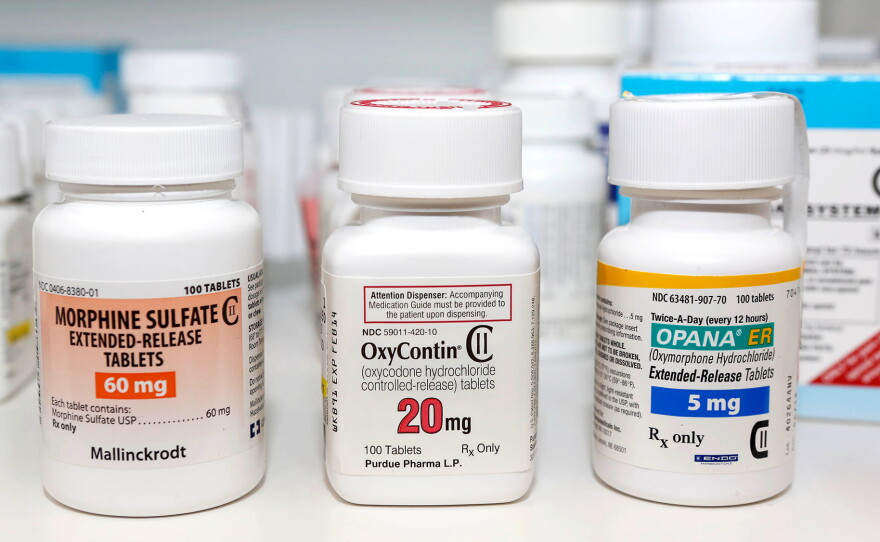
To immediately grasp how Opana fits into the medical landscape, look at this standard oral opioid strength hierarchy. This ranking helps illustrate why mathematical conversions are so important.
Fentanyl > Opana (Oxymorphone) > Oxycodone > Morphine > Hydrocodone
Note: Fentanyl is significantly stronger than all oral opioids listed, but Opana stands as one of the most potent oral prescription painkillers available.
WHAT IS OPANA?
Opana is the brand name for oxymorphone, a powerful semi-synthetic prescription opioid. It works by binding directly to specific receptors in the brain and spinal cord. This action alters how the nervous system perceives pain signals.
Doctors typically prescribe it for severe, continuous pain that cannot be managed by weaker medications. People use it after major surgeries, for severe trauma, or for chronic conditions when other treatments fail. Beginners often misunderstand it because the pill dosages look small, but the actual drug inside is highly concentrated in terms of pain-relieving power. To understand the foundational aspects of this drug, you can read our complete Opana uses and risks guide.
CURRENT RESEARCH OR INDUSTRY STATUS
Experts currently know that Opana is an effective pain reliever, but they also recognize its high risk profile. Research indicates that because of its potency, it carries a significant danger of respiratory depression and addiction.
The CDC opioid prescribing guidelines heavily emphasize using the lowest effective dose for the shortest duration possible. Furthermore, FDA safety warnings specifically highlight that extended-release opioids like oxymorphone should be reserved for patients requiring daily, around-the-clock care when alternative options are insufficient.
What remains uncertain is the long-term neurological impact of switching between high-potency opioids. Current limitations include the difficulty of prescribing it safely to opioid-naive patients. Ongoing developments in 2026 focus heavily on abuse-deterrent formulations and integrating non-opioid therapies to reduce reliance on strong drugs like oxymorphone.
WHY THIS HAPPENS
Understanding opioid strength is not straightforward. The root causes of potency confusion usually stem from a few areas.
Wrong assumptions
Many patients assume that a 10 mg pill of one opioid is equal to a 10 mg pill of another. This is a dangerous misconception. Pharmacology dictates that different compounds have entirely different baseline strengths.
Outdated information
People often rely on outdated internet forums that suggest “morphine is the strongest.” In reality, semi-synthetic derivatives like oxymorphone are mathematically much stronger.
Technical limitations
Doctors use mathematical conversion charts to switch patients between opioids. However, these calculations are not perfect due to a concept called “incomplete cross-tolerance,” meaning a patient’s tolerance to one drug doesn’t fully protect them from another.
Environmental factors
A person’s metabolism, liver function, and whether they have eaten can drastically alter how strongly the drug affects them, making standardized comparisons tricky in real life.
WHY IT MATTERS
Understanding this topic is critical for patient safety. The most common consequence of misunderstanding opioid strength is accidental overdose. If a patient assumes Opana is weak and takes an extra pill, the results can be fatal.
Beginners get confused because pharmaceutical labels do not prominently display the relative strength next to other drugs. To see how these milligrams stack up directly, see our Opana vs oxycodone comparison for a full breakdown of their differences. Misinformation spreads quickly because people share personal anecdotes rather than relying on established medical conversion metrics like MME.
WHO SHOULD NOT USE OPANA
Because of its high potency, Opana is not safe for everyone. Medical guidelines strictly advise against prescribing this medication to certain individuals due to severe risk factors.
- Opioid-Naive Patients: Individuals who have never taken opioids or do not have a built-up tolerance should not use Opana, especially the extended-release form. A standard dose can cause fatal respiratory depression in someone without prior opioid exposure.
- Respiratory Conditions: Patients with severe asthma, chronic obstructive pulmonary disease (COPD), or other conditions that suppress breathing should avoid Opana, as it further slows the respiratory system.
- History of Substance Misuse: Individuals with a personal or family history of severe substance use disorder or addiction should seek alternative treatments, as the euphoric effects of oxymorphone carry an extreme risk of psychological dependence.
ALTERNATIVES TO HIGH-POTENCY OPIOIDS
Because of the severe risks associated with high-potency opioids, medical guidelines in 2026 strongly recommend exploring other options first. Current evidence suggests a multi-modal approach is safer for long-term care.
- NSAIDs and Acetaminophen: Over-the-counter anti-inflammatories (ibuprofen, naproxen) and analgesics are highly effective for mild to moderate musculoskeletal pain without the addiction risks.
- Nerve Pain Medications: Drugs like gabapentin or pregabalin target nerve signal misfires directly, offering relief for neuropathic conditions where opioids often fail.
- Physical Therapy: Strengthening supporting muscles and improving flexibility addresses the mechanical root cause of pain rather than just masking symptoms.
- Interventional Treatments: Epidural steroid injections, nerve blocks, and radiofrequency ablation deliver localized relief, bypassing the brain and minimizing systemic side effects.
HOW TO SOLVE OR UNDERSTAND OPIOID STRENGTH
To safely understand how Opana compares to other opioids, follow these logical steps.
Step 1: Learn the MME Metric
Medical professionals use Morphine Milligram Equivalents (MME) to compare opioids. Morphine is the baseline (1 mg = 1 MME). This standardizes all opioid strengths into one universal language.
Step 2: Calculate Opana’s Conversion Factor
Research indicates that oral oxymorphone has an MME conversion factor of 3. This means 10 mg of oral Opana is equivalent to 30 mg of oral morphine. If a doctor decides when transitioning to extended-release oxymorphone for continuous relief, they must use this exact math.
Step 3: Consult a Doctor for Transitions
Never try to calculate a medication switch yourself. A doctor must calculate the dose and reduce it by 25-50% to account for incomplete cross-tolerance, ensuring the patient does not accidentally receive a toxic dose.
COMMON MISTAKES
Avoiding these errors can prevent serious medical emergencies.
Mistake: Comparing milligrams directly
Why it happens: People naturally assume numbers correspond equally across similar items. How to avoid it: Always remember that 10 mg of Opana is not equal to 10 mg of oxycodone. Use MME charts for reference.
Mistake: Breaking extended-release pills
Why it happens: Patients want faster relief or want to split a high dose in half. How to avoid it: Never break an ER pill. It destroys the slow-release matrix, causing a massive, potentially fatal dose to hit the body instantly.
Mistake: Stacking opioids
Why it happens: When pain breaks through, patients take a second different opioid without realizing the combined strength. How to avoid it: Track all medications in a journal and do not mix opioids without explicit medical supervision.
FACTORS THAT AFFECT RESULTS
Several variables influence how strongly Opana affects an individual.
- Quality: Pharmaceutical grade vs. illicit sources drastically changes risk. Patients who order medication online must verify pharmacy credentials to ensure quality and avoid dangerous counterfeits.
- Timing: Taking Opana on an empty stomach increases absorption, which can dangerously spike the drug’s strength.
- Environment: Liver enzyme variations mean some people metabolize the drug much faster than others.
- Experience level: Opioid-naive individuals will feel the strength of Opana much more intensely than chronic pain patients with built-up tolerance.
COMPARISON TABLE
Understanding relative strength helps clarify why Opana is considered a heavy-duty medication.
| Option | Advantages | Limitations |
|---|---|---|
| Opana (Oxymorphone) | Highly potent; requires smaller physical doses; less histamine release than morphine. | High risk of respiratory depression; strict Schedule II regulations; dangerous if misused. |
| Oxycodone | Very effective; widely prescribed; familiar to most pain doctors. | Less potent than Opana; heavily metabolized by liver enzymes causing more drug interactions. |
| Morphine | The gold standard baseline; widely available; well-studied over decades. | Only 1/3 as strong as Opana; causes severe itching and histamine reactions in many patients. |
| Hydrocodone | Moderate potency; good for moderate-to-severe acute pain. | Weakest on this list; not suitable for severe, around-the-clock chronic pain management. |
WHAT CURRENT EVIDENCE SUGGESTS
Current evidence provides a clear picture of Opana’s standing among painkillers.
| Topic | Evidence Strength |
|---|---|
| Human evidence | Strong. Clinical data clearly establishes its 3:1 potency ratio over morphine. |
| Animal evidence | Strong. Receptor binding studies confirm high central nervous system activity. |
| Long-term evidence | Moderate. Long-term data is often complicated by the risks of dependence and tolerance. |
| Current consensus | Medical consensus states it is a last-resort medication due to its extreme strength. |
PRO TIPS
Practical, realistic advice for managing high-potency opioids.
- Keep a Pain Journal: Document your exact dose, the time taken, and your pain level. This helps doctors adjust safely.
- Never Mix with Alcohol: Alcohol can multiply Opana’s strength unpredictably, leading to fatal respiratory failure.
- Store Securely: Because of its high strength and street value, keep it in a lockbox.
- Verify Sources: When acquiring medication, use a trusted source to ensure you are receiving the correct, unadulterated pharmaceutical product.
SAFETY / BEST PRACTICES
Use neutral language when evaluating medication strength. Always follow reliable guidance from a licensed physician. Verify information through medical databases rather than online anecdotes.
Use trusted resources for your medication needs. Understand the limitations of opioid therapy; it is meant to reduce pain to a manageable level, not eliminate it entirely. Avoid unsupported claims that one opioid is “safer” than another without looking at the MME conversion and the patient’s tolerance. If you or a loved one are struggling with dependence, learn more in our opioid withdrawal symptoms guide for safe tapering steps.
RELATED GUIDES
- Opana Uses and Risks Guide (Pillar Page)
- Opana vs Oxycodone Comparison: Which is Stronger?
- Opioid Withdrawal Symptoms Guide: Safe Tapering Steps
- Pain Management Alternatives: Beyond Opioid Therapy
FAQ
Is Opana stronger than oxycodone? Yes, Opana (oxymorphone) is roughly twice as strong as oxycodone. A 10 mg dose of Opana provides pain relief equivalent to about 20 mg of oxycodone, meaning it requires a much smaller dose to achieve the same effect.
What is the equivalent of Opana to morphine? Oral Opana is approximately three times more potent than oral morphine. Therefore, a 10 mg dose of Opana is equivalent to 30 mg of morphine. Doctors use this 3:1 ratio to calculate safe transitions.
Is Opana still available in the US? Yes, generic oxymorphone is still available and legally prescribed in the US. However, the original brand-name Opana ER was discontinued in 2017 after the FDA requested its removal due to public health concerns related to intravenous abuse.
What is the safest opioid? There is no universally “safest” opioid. Current evidence suggests safety depends heavily on the patient’s medical history, proper dosing, and duration of use. However, weaker opioids like hydrocodone generally carry a lower risk of fatal respiratory depression than high-potency drugs like Opana.
Which opioid is strongest for chronic pain? For severe, chronic pain requiring around-the-clock management, high-potency extended-release opioids like Opana ER, morphine ER, or transdermal fentanyl are often used. Fentanyl is mathematically the strongest, but Opana is among the most potent oral options.
Why does Opana feel stronger than other opioids? Opana has a high binding affinity to opioid receptors and bypasses certain liver enzymes that break down other drugs. This means more of the active medication reaches your brain, creating a highly potent effect.
KEY TAKEAWAYS
- Main takeaway: Opana is highly potent, roughly three times stronger than morphine and twice as strong as oxycodone.
- Important limitation: Mathematical conversions between opioids are never perfect due to individual metabolic differences and incomplete cross-tolerance.
- Most common mistake: Comparing pill milligrams directly across different opioid types.
- Best practice: Always use the Morphine Milligram Equivalent (MME) metric to understand relative strength.
- Current evidence: Strong clinical data supports Opana’s high potency, but CDC and FDA guidelines stress it should be a last-resort option.
- Next step: Consult a licensed physician to safely evaluate your pain management options and explore non-opioid alternatives.
CONCLUSION
Understanding how strong Opana is compared to other opioids requires looking past the pill bottle and focusing on medical conversion metrics. By recognizing that oxymorphone is significantly stronger than morphine or oxycodone, patients can better appreciate the serious nature of this medication. Always rely on professional medical guidance when calculating doses or switching medications. To continue learning about safe medication practices, explore our related guides on opioid withdrawal symptoms and pain management alternatives.
