
Blog
Vyvanse vs Adderall (2026): Which Is Stronger, Safer & Better for Focus, Mood + Weight Loss?
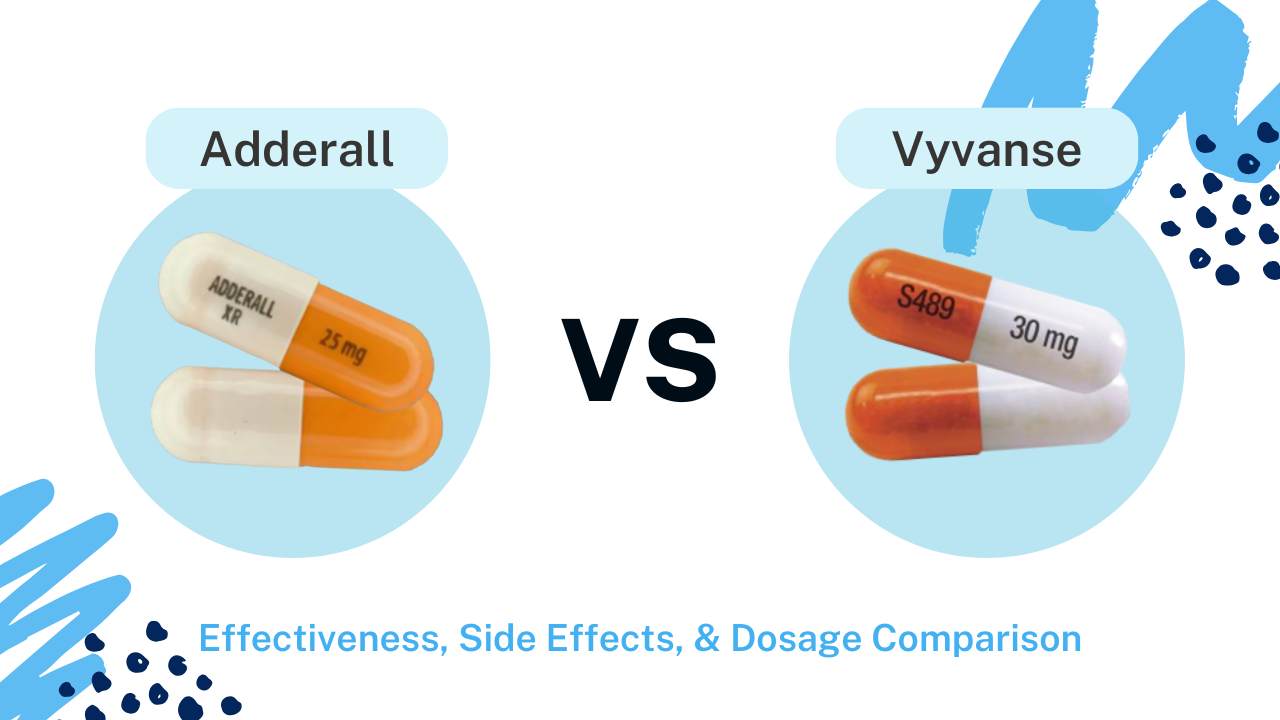
Jun
Choosing between Vyvanse vs Adderall is one of the most common dilemmas for adults managing ADHD. Both are central nervous system stimulants, but their different delivery mechanisms completely change how they feel, how long they last, and how they impact your daily life. The confusion usually stems from mismatched expectations or misunderstanding how their active compounds metabolize. Here, you will learn exactly how each drug performs regarding raw strength, safety, sustained focus, mood stability, and weight loss, so you can make an informed, practical choice with your prescriber.
Quick Answer (Featured Snippet)
Vyvanse is generally considered smoother and safer for mood stability due to its prodrug formulation, which requires the liver to metabolize it slowly, preventing abrupt highs and crashes. Adderall is stronger and faster-acting, providing an immediate boost in focus but with a higher risk of jitteriness, anxiety, and a hard crash. For weight loss, Adderall suppresses appetite more aggressively, though neither should be used solely for this purpose.
What is Vyvanse vs Adderall?
At their core, Vyvanse and Adderall are both amphetamine-based stimulants prescribed to treat ADHD and narcolepsy. They work by increasing dopamine and norepinephrine in the brain, which improves executive function, alertness, and impulse control.
However, they are chemically distinct. Adderall is a mixture of four amphetamine salts (75% dextroamphetamine and 25% levoamphetamine). It comes in both Immediate Release (IR) and Extended Release (XR) formats. Because it is already an active drug when swallowed, it begins working rapidly.
Vyvanse (lisdexamfetamine) is a “prodrug.” This means it is biologically inactive until your liver enzymes cleave off a specific amino acid (lysine). Once that conversion happens, it becomes pure dextroamphetamine. This chemical design forces a slow, steady release that lasts up to 14 hours, making abuse via snorting or injecting virtually impossible and eliminating the sharp peaks and valleys of traditional stimulants.
Why This Happens (Structured)
Wrong habits
Taking either medication with high-acid juices (like orange or grapefruit) or Vitamin C supplements drastically lowers absorption, making the drug feel weak or ineffective. Conversely, taking them too late in the day guarantees sleep disruption.
Outdated tools/info
Relying on dosage equivalency charts from a decade ago ignores recent generic availability changes and updated FDA guidelines regarding long-acting stimulants. In 2026, with generic lisdexamfetamine widely available, cost and formulation options have shifted significantly.
Misunderstanding system
People often confuse a drug’s half-life with its duration of clinical effect. Adderall XR may have a half-life of 10-12 hours, but its therapeutic focus benefits often wear off after 8 hours, leaving users fatigued but unable to sleep.
External limitations
Insurance formularies heavily dictate which drug you can actually access. Even if Vyvanse is clinically better for your profile, prior authorization requirements or high copays for brand-name drugs often force patients onto Adderall XR.
ENTITY DEPTH: Understanding the Medications
To truly compare these medications, we must look at them as individual entities with distinct profiles.
Vyvanse (Lisdexamfetamine)
- What it is: A long-acting central nervous system stimulant prodrug containing lisdexamfetamine.
- Why it matters: Its prodrug status means the body must enzymatically convert it into active dextroamphetamine, forcing a slow, consistent release over 10 to 14 hours.
- Who uses it: Individuals who need all-day symptom control without the hassle of multiple daily doses. It is also heavily prescribed for those with a history of substance abuse, binge eating disorder (its only other FDA-approved use), or sensitivity to the harsh onset of traditional stimulants.
- Strengths: Smooth onset with no sudden “jolt,” long-lasting duration, lower abuse potential, and consistent focus throughout the day.
- Limitations: Once taken, the dose cannot be adjusted for the day. If it causes insomnia, you cannot simply take a lower dose the next morning to compensate; you must wait for the prescription to be adjusted. It is also notoriously difficult to wake up from if you do not get enough sleep.
- Beginner suitability: Highly suitable. The gentle onset is forgiving for first-time stimulant users, though the long duration requires strict morning dosing discipline.
Adderall (Mixed Amphetamine Salts)
- What it is: A central nervous system stimulant available in Immediate Release (IR) and Extended Release (XR), composed of four amphetamine salts (both dextroamphetamine and levoamphetamine).
- Why it matters: The inclusion of levoamphetamine provides a stronger peripheral nervous system effect, which increases physical energy and alertness but also physical side effects like heart rate spikes.
- Who uses it: People who need flexible dosing. IR is favored by college students or professionals who only need focus for specific study/work blocks and want the medication out of their system by bedtime.
- Strengths: Rapid onset (IR works in 20-30 minutes), highly customizable dosing schedules (e.g., taking half a pill to gauge effect), and strong, undeniable focus enhancement.
- Limitations: The “crash” is physically and emotionally pronounced, causing irritability, fatigue, and sometimes depressive moods as the drug wears off. IR requires multiple doses per day. High abuse potential.
- Beginner suitability: Moderate. While highly effective, the sudden onset and sharp crash can be alarming for stimulant-naive users. XR is more beginner-friendly than IR.
Vyvanse vs Adderall: Comparison Tables
To clearly visualize the pharmacological and practical differences, review these direct comparison charts.
Table 1: Pharmacological Profile Comparison
| Feature | Vyvanse (Lisdexamfetamine) | Adderall (Mixed Amphetamine Salts) |
|---|---|---|
| Drug Class | CNS Stimulant (Prodrug) | CNS Stimulant |
| Active Compounds | 100% Dextroamphetamine (after metabolism) | 75% Dextroamphetamine / 25% Levoamphetamine |
| Available Forms | Capsule, Chewable tablet | Immediate Release (IR) Tablet, Extended Release (XR) Capsule |
| Onset Time | 1 to 1.5 hours | IR: 20-30 mins / XR: 30-60 mins |
| Duration of Effect | 10 to 14 hours | IR: 4-6 hours / XR: 8-10 hours |
| Abuse Potential | Lower (cannot be snorted/injected) | Higher (IR can be crushed and misused) |
| Generic Availability | Yes | Yes |
Table 2: Daily Experience & Side Effect Differences
| Effect / Side Effect | Vyvanse | Adderall |
|---|---|---|
| The “Kick-in” Feeling | Smooth, gradual clearing of brain fog | Sudden, noticeable physical and mental rush |
| The “Crash” | Gentle return to baseline; mild fatigue | Abrupt drop; irritability, sadness, fatigue |
| Anxiety Risk | Lower; smoother dopamine curve | Higher; levoamphetamine triggers physical jitteriness |
| Appetite Suppression | Steady, all-day lack of hunger | Intense daytime fasting, severe evening rebound hunger |
| Sleep Disruption | High if taken after 10 AM (long duration) | Manageable if IR stops by 2 PM; XR can disrupt sleep |
| Dose Flexibility | Low (committed for 14 hours once taken) | High (IR allows dose adjustments on the fly) |
Key Differences Between Vyvanse and Adderall
Beyond the basic stats, the actual lived experience of these drugs differs in a few critical ways that charts cannot fully capture.
The Prodrug Mechanism vs. Active Salts
The most fundamental difference is how the drug enters your system. Adderall is pharmacologically “alive” the moment it hits your stomach. It dissolves and immediately floods your bloodstream with amphetamines. This is why Adderall hits hard and fast. Vyvanse is a prodrug; it is essentially a Trojan horse. The medication is bonded to the amino acid lysine, rendering it inactive. Your red blood cells must slowly strip the lysine away in the liver before the drug becomes active. This enzymatic process acts as a natural time-release mechanism that cannot be rushed or bypassed.
Dextroamphetamine vs. Levoamphetamine
Vyvanse metabolizes into pure dextroamphetamine. Dextroamphetamine acts primarily on the central nervous system, targeting the brain to enhance cognitive focus and clarity with fewer physical side effects. Adderall contains 75% dextroamphetamine but also 25% levoamphetamine. Levoamphetamine heavily stimulates the peripheral nervous system. This is what causes the physical “push”—higher heart rate, stronger blood flow, jitteriness, and that feeling of physical energy. This is why Adderall feels more “speedy” and Vyvanse feels more purely “mental.”
Flexibility vs. Consistency
Adderall IR is the king of flexibility. You can take 10mg in the morning, see how you feel, and decide whether to take another 10mg at noon. You can skip afternoon doses if you want to sleep early. Vyvanse is the king of consistency. You take it once, and you are locked into a 12-14 hour ride. If you take too high a dose and feel anxious, you just have to ride it out for the rest of the day. If you take it too late, you will not sleep.
Vyvanse vs Adderall: Which Is Stronger, Safer & Better for Focus, Mood + Weight Loss?
This is the core comparison. When analyzing strength, safety, focus, mood, and weight loss, the pharmacological differences between these two drugs become painfully—or wonderfully—obvious.
Which Is Stronger?
“Strength” is subjective, but pharmacologically, Adderall feels stronger.
Because Adderall contains levoamphetamine and is delivered in an active form, it hits the central and peripheral nervous systems simultaneously and aggressively. Your heart rate increases, your blood pressure rises, and you physically feel the medication kicking in. This physical rush translates to a psychological feeling of intensity, drive, and raw strength.
Vyvanse, being purely dextroamphetamine after a slow metabolic conversion, is heavily weighted toward central nervous system stimulation. It quietly clears brain fog rather than violently pushing your body into overdrive.
If you measure strength by the sheer force of the initial impact and physical hyper-focus, Adderall is the stronger drug. If you measure strength by the total duration of uninterrupted cognitive control, Vyvanse wins. For those who want a powerful, noticeable kick to overcome severe executive dysfunction or inertia, Adderall IR is unmatched. For those who find that physical “kick” triggering or uncomfortable, Vyvanse’s quieter, steady strength is vastly preferable. [Internal Link: Guide to ADHD Medication Titrations]
Which Is Safer?
From an abuse-deterrent standpoint, Vyvanse is objectively safer. Because it requires the liver to cleave the lysine molecule, it cannot be snorted, smoked, or injected for a rapid high. If someone attempts to misuse Vyvanse, they will only get the slow, steady release the oral pill provides. Adderall IR, on the other hand, is easily crushed and misused, contributing to its Schedule II risk profile and higher street value.
From a daily side-effect standpoint, Vyvanse is generally safer for cardiovascular and emotional health. The smooth pharmacokinetic curve of Vyvanse prevents the sudden spikes in heart rate and blood pressure that Adderall causes. These cardiovascular spikes are dangerous for individuals with underlying heart conditions, and the emotional spikes are dangerous for those with anxiety or bipolar disorder.
However, both medications carry the exact same FDA black-box warnings regarding dependence, cardiovascular events, and psychiatric side effects. Taking either without proper medical supervision, or mixing them with other substances, eliminates any safety advantage. Adderall’s safety risk is mostly acute (the sudden physical strain, crash, and abuse potential), while Vyvanse’s safety risk is cumulative (the chronic exhaustion that builds from 14-hour daily stimulation if you are not sleeping properly).
Which Is Better for Focus?
This depends entirely on what kind of focus you need, and when you need it.
If you need situational focus—the ability to sit down at 2:00 PM and intensely study for three hours—Adderall IR is the superior tool. It acts fast, provides a dense, hyper-focused state, and then leaves your system. Adderall XR provides a similar deep focus but splits it into two waves, often resulting in a slight dip in focus around the 4-5 hour mark before the second dose releases. The downside to Adderall’s focus is that it can be too strong; users often experience “hyper-focus,” where they get locked into a trivial task (like organizing a desk or scrolling social media) for hours, completely unable to pivot to their actual priorities.
If you need sustained, ambient focus—getting through a full 9-to-5 workday, managing household tasks in the evening, and maintaining executive function consistently without hyper-focusing on the wrong things—Vyvanse is better. Because it metabolizes steadily, you do not experience the “wave” effect. You simply have the mental bandwidth to choose what to focus on, rather than being held hostage by the drug’s peak. Many users report that Adderall forces focus (even on the wrong things), while Vyvanse restores the ability to focus. [Internal Link: How to Build Focus Habits Alongside ADHD Meds]
Which Is Better for Mood?
Vyvanse is overwhelmingly considered better for mood stability.
The “Adderall crash” is a well-documented, harsh reality. As the drug rapidly leaves your system, dopamine levels plummet. This results in severe irritability, sadness, emotional blunting, or even depressive episodes. For individuals with comorbid anxiety or depression, this crash can be debilitating. Furthermore, the levoamphetamine in Adderall often exacerbates anxiety, causing a jittery, restless feeling that mimics panic attacks.
Because Vyvanse metabolizes slowly, the dopamine and norepinephrine levels taper off gradually over hours. There is no sharp drop-off. Users rarely experience a “crash” from Vyvanse; instead, they simply notice their ADHD symptoms returning as the day ends. This gentle return to baseline protects emotional regulation.
However, there is a catch. If Vyvanse keeps you awake (which is common given its 14-hour duration), the resulting sleep deprivation will ruin your mood the following day, regardless of how smooth the drug itself is. Mood stability on Vyvanse is highly dependent on strict morning dosing and excellent sleep hygiene.
Which Is Better for Weight Loss?
Neither medication should be prescribed for weight loss, but appetite suppression is an unavoidable side effect of both. Adderall suppresses appetite more aggressively, but Vyvanse’s longer duration makes its impact more sustained—and potentially more insidious.
Adderall’s intense onset kills the desire to eat completely. Many users forget to eat entirely during the day, only to experience ravenous, uncontrolled hunger (rebound eating) at night when the medication wears off. This creates a cycle of daytime fasting and evening bingeing that wrecks metabolism, causes blood sugar crashes, and promotes fat storage.
Vyvanse suppresses appetite steadily throughout the entire day and well into the evening. You might not feel hungry for lunch or dinner, and the lack of a severe crash means the nighttime rebound hunger is usually milder. Over time, however, Vyvanse’s 14-hour suppression can lead to unintended chronic calorie deficits, muscle depletion, and nutritional deficiencies that harm your metabolism long-term.
If weight management is a concern, Vyvanse is slightly safer for long-term metabolic health because it avoids the severe starvation-and-binge cycle that Adderall often triggers. However, chronic appetite suppression from either drug leads to unhealthy weight loss. If you take either medication, you must proactively schedule high-protein meals, even if you lack the physical sensation of hunger. [Internal Link: Managing ADHD Stimulant Weight Loss Safely]
HOW TO FIX / IMPROVE Your ADHD Medication Experience
Starting a new stimulant—or switching between Vyvanse and Adderall—requires fine-tuning. The drug alone will not fix your life; it simply provides the neurological baseline to build better habits.
First: Foundation setup
Before taking your first dose, establish a rigid morning routine. Eat a high-protein breakfast 30 minutes before taking your medication. Protein provides the amino acids (like tyrosine) your brain needs to manufacture dopamine. If you take a stimulant on an empty stomach with no protein reserves, you will experience a weak, jittery high followed by a devastating crash. View various pills here
Next: Fix mistakes and habits
Stop consuming Vitamin C or citrus juice within an hour of taking your medication. Ascorbic acid and high-acid environments in the stomach actively flush amphetamines out of your body before they can be absorbed. If you drink orange juice with your Adderall, you are literally throwing money and medication down the drain. Save your fruit and vitamin C supplements for the evening when you actually want the medication to clear your system for sleep.
Finally: Improve system/tools/strategy
Track your physical and emotional state for the first two weeks. Keep a simple log: time taken, time you feel it “kick in,” time you feel it wear off, and your mood at 8 PM. This data is invaluable for your prescriber. If Adderall XR crashes you at 2 PM, your doctor might add a small IR “booster” or switch you to Vyvanse. If Vyvanse keeps you up until 3 AM, you may need to set an alarm to take it at 6 AM, or drop your dose slightly.
COMMON PROBLEMS & FIXES
Problem: Severe afternoon crash and irritability
Fix: This is most common with Adderall IR and XR. Instead of reaching for more caffeine (which will worsen the crash and dehydrate you), eat a dense, protein-rich snack about 30 minutes before you typically crash. Also, ask your doctor about adding a low-dose IR booster in the afternoon to smooth the transition off the XR, or consider switching to Vyvanse for a gentler decline in dopamine.
Problem: Can’t fall asleep even though the meds wore off
Fix: Stimulants suppress melatonin production and keep your nervous system alert long after the focus benefits fade. Fix this by forcing a “wind-down” routine. Stop all screens 90 minutes before bed, take a magnesium glycinate supplement (which helps calm the central nervous system), and ensure you took your dose early enough. If you took Vyvanse at 10 AM, it may still be active at midnight.
Problem: Medication makes me feel “zombie-like” or emotionally flat
Fix: This usually means your dose is too high. A properly titrated stimulant should make you feel like yourself, just capable of directing your attention. Do not tolerate emotional blunting or the loss of your personality. Talk to your doctor about dropping the dose by 5mg or 10mg. Often, a lower dose of Adderall or Vyvanse provides better focus without robbing you of your emotions.
Problem: Intense headaches in the afternoon
Fix: Stimulants are vasoconstrictors—they narrow blood vessels—and they are heavily dehydrating. Afternoon headaches are almost always a combination of dehydration, rebounding blood vessels, and jaw clenching (bruxism) from focus. Drink electrolyte-infused water throughout the day, and become mindful of whether you are clenching your jaw at your desk.
PRO TIPS (From Experience)
- The “Protein First” Rule: Never take Vyvanse or Adderall on an empty stomach without protein. A carb-only breakfast (like a bagel or pastry) causes an insulin spike that blunts the medication’s effectiveness and worsens the crash. Eggs, Greek yogurt, or a protein shake are non-negotiables for a smooth medication day.
- Use Medication Holidays Wisely: If you take Vyvanse daily, your body will eventually build a tolerance, requiring higher doses for the same effect. Taking structured “drug holidays” (e.g., skipping meds on lazy Sundays or vacation days) allows your dopamine receptors to reset, keeping your baseline dose effective for years.
- Hydration is Not Optional: Stimulants dehydrate you and constrict blood vessels. If you get headaches, brain fog, or muscle cramps on Vyvanse or Adderall, you are likely dehydrated. Drink electrolyte-infused water, not just plain water, to replenish what the stimulants flush out.
- Beware the Rebound Binge: Both drugs suppress appetite, but Vyvanse’s 14-hour run means you might go all day without eating. When it wears off, the hunger is primal. Prep a healthy, high-protein dinner in advance so you don’t gorge on sugar and carbs at 8 PM, which will ruin your sleep and next day’s focus.
- The Acid Flush for Emergencies: If you accidentally took your medication too late in the day and need to sleep, you can use the “acid flush” method. Drink a large glass of cranberry juice or take a Vitamin C supplement. High acidity in the urinary tract forces the kidneys to excrete amphetamines much faster, helping clear the drug from your system.
SAFETY & BEST PRACTICES
It is critical to maintain realistic, grounded expectations when using Schedule II stimulants.
Both Vyvanse and Adderall carry serious risks if misused. They can increase blood pressure and heart rate, making regular cardiovascular monitoring essential. Do not assume a smooth feeling means the drug isn’t straining your heart. If you have a family history of cardiac issues, insist on an EKG before starting either medication.
Furthermore, stimulants do not cure ADHD. They are a tool that lowers the barrier to entry for focus and executive function. If you rely solely on the drug without building external systems (calendars, timers, organizational apps), you will only focus intensely on the wrong things.
Never share your medication, and never mix these drugs with alcohol. The stimulant masks the depressant effects of alcohol, leading to dangerous levels of drinking, severe dehydration, and intense cardiovascular strain. Always store your medication in a locked cabinet, as these are highly targeted for theft. Be honest with your prescriber about side effects, and never adjust your dose without their explicit instruction.
RELATED GUIDES
- Vyvanse vs Adderall for Beginners: Starter Guide
- Common Problems with Long-Acting Stimulants
- Best Tools for Managing ADHD Without Medication
- Beginner Setup Guide: How to Talk to Your Doctor About ADHD
FAQ
1. Can you switch directly from Adderall to Vyvanse? Yes, doctors frequently switch patients directly from one to the other. However, the dosages do not match 1:1. For example, 30mg of Adderall XR is roughly equivalent to 70mg of Vyvanse. Your doctor will calculate the correct cross-titration to ensure you don’t overdose or experience withdrawal.
2. Does Adderall or Vyvanse cause more hair loss? Hair loss is not a direct side effect of either drug, but it can occur indirectly. Stimulants restrict blood flow to the skin and suppress appetite, leading to nutritional deficiencies (like zinc, iron, or B vitamins) that cause hair shedding. Adderall’s harsher physical impact and worse rebound eating make this slightly more common.
3. Why does Adderall make me sweat but Vyvanse doesn’t? Adderall contains levoamphetamine, which heavily stimulates the peripheral nervous system (your body’s “fight or flight” response). This increases heart rate, body temperature, and perspiration. Vyvanse is pure dextroamphetamine, which targets the brain more than the body, resulting in fewer physical sweat responses.
4. Is generic Vyvanse as effective as the brand name? Since the generic for lisdexamfetamine was released, most patients report it being equally effective. However, generic fillers and binders differ slightly by manufacturer. If you notice a drop in efficacy or new side effects after switching to a generic, ask your pharmacist to try a different manufacturer.
5. Can I drink coffee while taking Vyvanse or Adderall? Proceed with extreme caution. Both medications are potent central nervous system stimulants; adding caffeine stacks the effects. This often leads to overstimulation, severe anxiety, palpitations, and an intensified crash. If you must have coffee, stick to one small cup in the morning before your medication fully kicks in.
6. What happens if Vyvanse doesn’t kick in for hours? Because Vyvanse requires liver metabolism, taking it with a high-acid stomach (from coffee, juice, or soda) or a heavy, fatty meal can delay absorption. If it consistently takes over 2 hours to work, shift your routine: take it immediately upon waking with a full glass of plain water, then eat breakfast 45 minutes later.
7. Which medication is worse for anxiety? Adderall is generally worse for anxiety. The levoamphetamine component causes physical symptoms—racing heart, sweating, jitteriness—that mimic a panic attack, which can trigger or worsen mental anxiety. Vyvanse’s slower, smoother onset is usually much easier on the nervous system for those prone to anxiety.
8. Can I open Vyvanse or Adderall XR capsules? You can open Vyvanse capsules and dissolve the powder in a glass of water; it will work exactly the same way because the drug is activated by the liver, not the capsule. You should never open Adderall XR capsules, as this destroys the extended-release mechanism, causing all the beads to release immediately like an IR dose, which can lead to an overdose.
CONCLUSION
Deciding between Vyvanse vs Adderall comes down to how your body metabolizes amphetamines and what your daily life demands. Adderall delivers a potent, fast-acting surge that crushes procrastination but risks emotional crashes and physical anxiety. Vyvanse offers a smooth, reliable day-long clarity that protects your mood but demands strict morning timing and heavy hydration. Neither is universally better; the right choice is the one that aligns with your physiology, your schedule, and an honest conversation with your psychiatrist.
